Posted in 3-D painting on canvas

Changes

Triptych, © Peter Baagøe Jepsen. 23 x 245 cm acrylic on canvas.

While planning and thinking out this project, much of my focus was on discovering the potential and nature of the canvas. Instead of the usual flat, and mostly discrete role as a ground to hold paint, canvas holds enough character and aesthetic qualities to be a lead player once a third dimension is added. Letting the canvas have a voice does however make it nearly impossible to ignore the more sculpturally inclined canvas, if applying any other media.

While tempting to let the sculptural qualities of the canvas get all the attention and leave it blank– allowing light and shadow to make its own art, I went through many stages before deciding. Any approach to painting these structures had not only to justify the sculptural qualities but be a means to help the viewer truly see, and appreciate the aesthetics of both shape and chroma, or there would be no balance.

But, after a lengthy process–I’m finally at peace with the result.
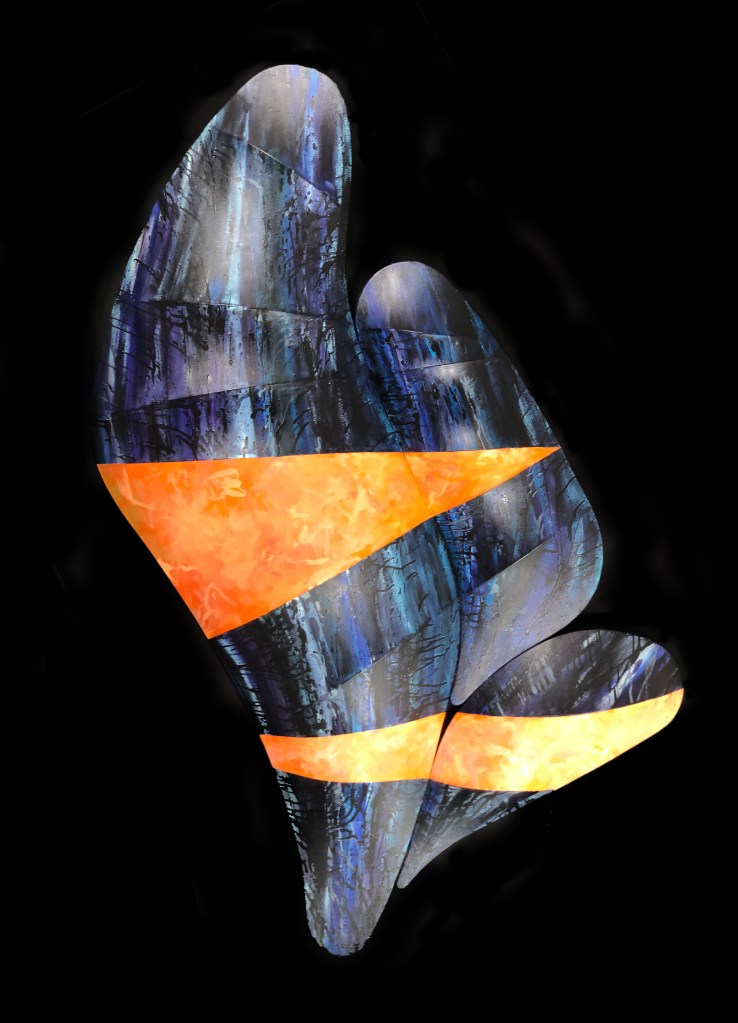
The rectangular dimensions listed with the photo, are only for crating and shipping purposes. If “Changes” is to be displayed as in the above photo it measures a full 254 cm from top to bottom.

Getting a little closer and on a slight angle, should help improve the perception of what otherwise could be seen as an entirely two-dimensional object?
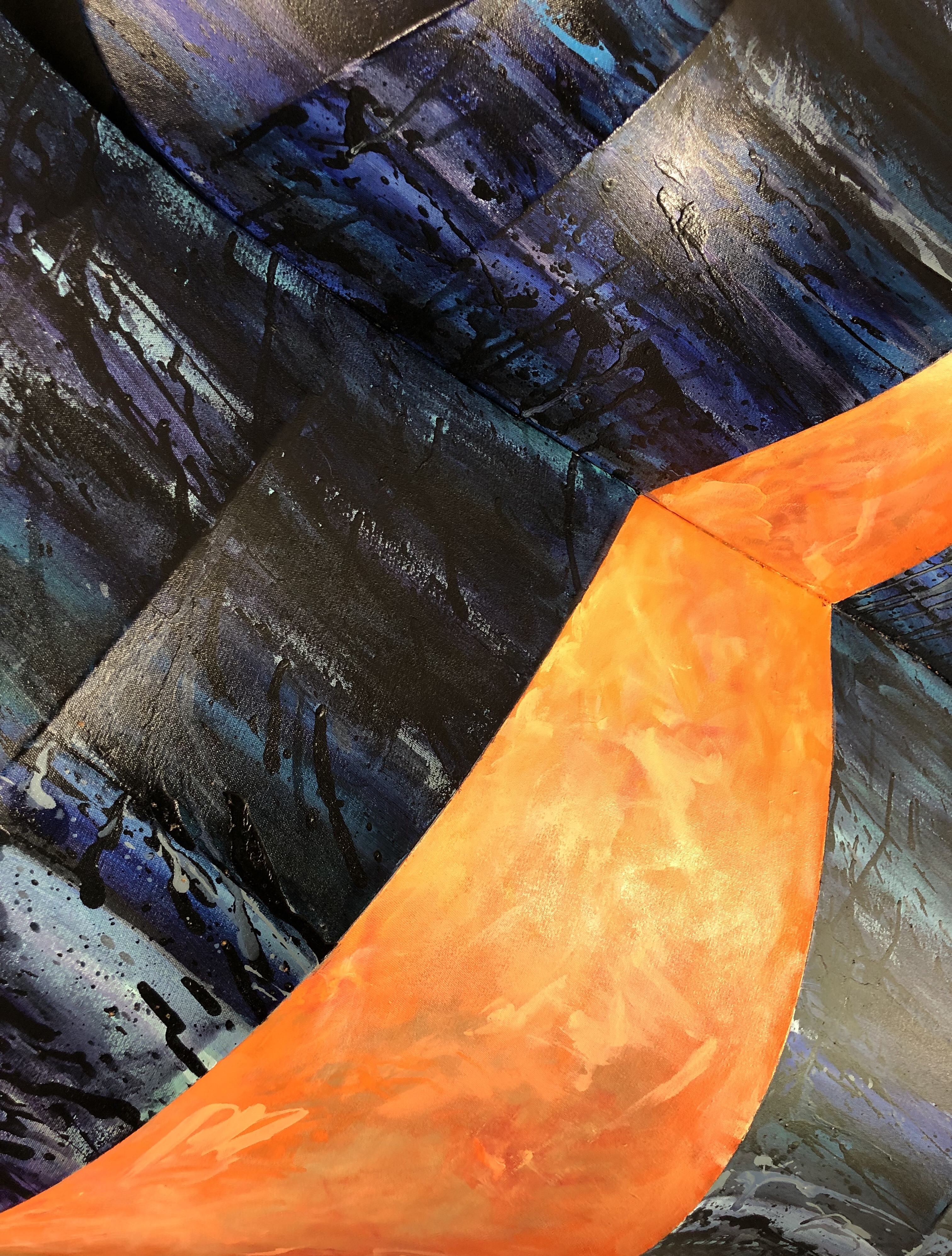
The arduous process required to bring about these structures makes photographing them seem like a reward, frequently opening up an all new perspective to me. Once transferred to a two-dimensional format, the different viewing angles takes on a unique character, with an entirely new aesthetic value–conceptually connected, yet entirely separate from the original.
Posted in 3-D painting on canvas

Rainy Day Monday

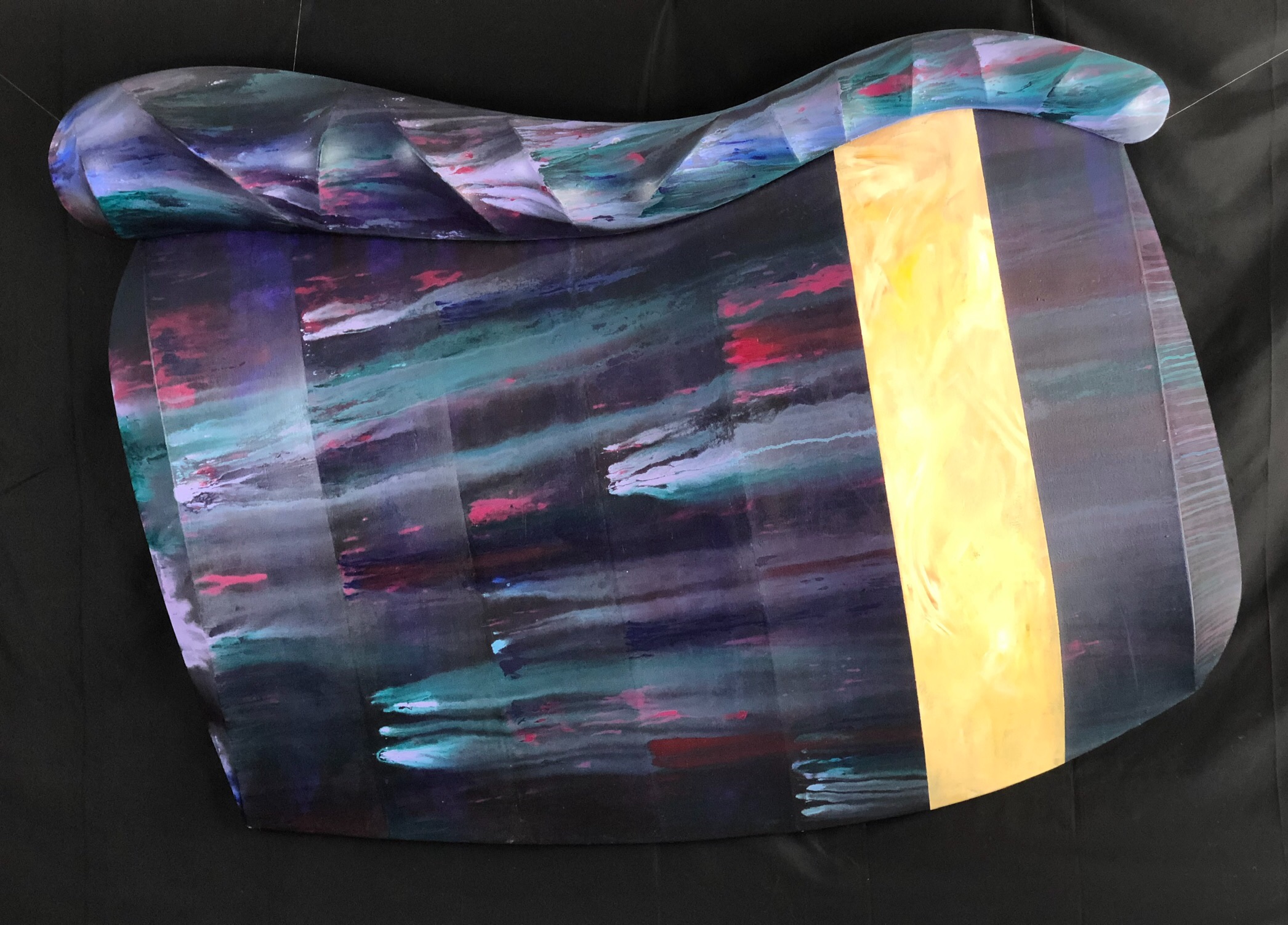
“Rainy Day Monday” Diptych, acrylic paint on a 3D canvas.

When I first photographed this piece in the garden for my Instagram account, it quickly became a matter of timing, wiping off drops of rain and rushing to take more pictures before the next drops began to fall. I finally thought we had succeeded and posted the pictures, only to find that the painting still had some droplets left, some partly wiped off and others not so much. After all the work preceding my rainy day photo session, a few drops of rain ended up giving name to the piece.

Before I had to fight the weather to photograph this piece, it had to be formed, first in my mind and then in the studio. I wanted to free myself from the conventions while still using conventional tools to do so, and what could be more conventional than paint and canvas in art–so that’s where I began.

The canvas, often referred to as ground, typically given a barely mentioned passive role and stretcher bars, discrete supports for the ground, could instead be called on as media, all working together, not to just carry a medium but all be equally significant media.

Much thought and experimentation came before the actual conceptualization of my idea but I wanted paint, canvas and stretcher bars to be media–all merged into one expression. For canvas and stretcher bars to be considered of value, their characteristics had to be considered and properly displayed to qualify as media.

But, with multiple media there must be a balance and when both stretcher bars and canvas explode into view, demanding attention, the painting must be equally explosive.

Photographed under different circumstances, away from the rain and using in-house lighting, here is my first realization of what began as merely an idea, challenging myself, wondering if in bringing out the characteristics of canvas, how far it would stretch–and still not rip or get wobbles (the rips and wobbles are maybe for another painting, another day.)